
his Is your hair falling more than usual? Before you blame your shampoo or your genes, check your plate. Hair is one of the first places your body signals a nutritional gap — and for millions of Indian women, the root cause of hair loss, thinning, and premature greying is sitting right inside their kitchen (or rather, missing from it). Read on to know about Nutritional deficiencies and hair loss. Here is what the science says about the most common nutritional deficiencies affecting hair — and the Indian foods that fix them naturally.
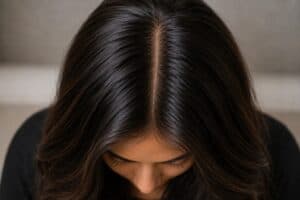
Why Nutrition Matters for Hair
Every single hair follicle on your scalp is a metabolically active, rapidly dividing cell. It needs a constant, steady supply of nutrients to produce new hair and maintain healthy growth cycles. When that supply is interrupted — whether from poor diet, absorption issues, or chronic restriction — your body makes a choice: redirect nutrients to vital organs and cut supply to hair. Hair is dispensable. Your heart is not.
The result is hair loss, slow growth, dullness, brittleness, and in some cases, premature greying.
8 Key Nutritional Deficiencies That Affect Hair
1. Iron — The Most Common Cause of Hair Loss in Indian Women
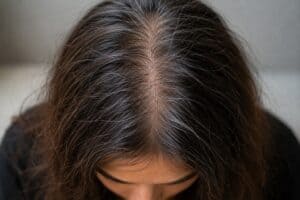
Iron is essential for producing haemoglobin, which carries oxygen to your scalp and hair follicles. Without adequate oxygen, follicles shift into the resting phase early — triggering telogen effluvium, a form of diffuse, all-over shedding.
Signs in hair: Excessive shedding, thinning at the parting and crown, slow regrowth, premature greying
Best Indian sources: Garden cress seeds (halim/aliv), palak, rajma, ragi, dates, sesame seeds (til). Pair with Vitamin C (amla, lemon) to enhance absorption.
Important: Get your serum ferritin tested — not just haemoglobin. You can be non-anaemic and still have iron levels too low for healthy hair.
2. Protein — The Building Block of Every Strand
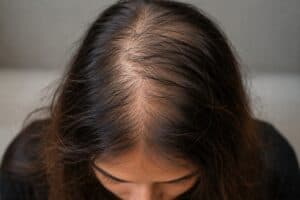
Hair is 95% keratin, a protein. When your diet is low in protein, your body goes into triage mode and stops sending amino acids to hair follicles, prioritising vital organs instead.
Signs in hair: Heavy, sudden shedding (2–3 months after deficiency begins), hair that stops growing, strands that break easily, loss of natural wave or curl, dull, lifeless appearance.
Best Indian sources: Eggs, paneer, curd (dahi), moong dal, soya chunks, sprouted legumes, and rajma. Most Indian women need 50–70g of protein daily — far more than a single bowl of dal provides.
3. Vitamin B12 — The Greying Vitamin
B12 is directly involved in red blood cell production and DNA synthesis — both critical for the rapidly dividing cells of hair follicles. It is also required for melanin production, the pigment that gives hair its colour.
Signs in hair: Premature greying (especially before age 35), diffuse hair loss, weak strands.
Who is at risk: Vegetarians and vegans are most vulnerable — B12 is found almost exclusively in animal foods. Studies show that correcting B12 deficiency can partially reverse premature greying in early stages.
Best Indian sources: Dahi, paneer, milk, eggs, fish. If purely plant-based, supplementation is necessary as food sources alone are insufficient.
4. Vitamin B6 — The Protein Translator
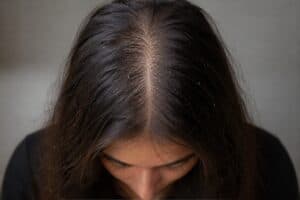
B6 helps the body metabolise protein into the amino acids that build keratin. Without B6, even if you eat enough protein, your follicles cannot use it efficiently. It also regulates sebum production on the scalp.
Signs in hair: Slow growth, flaky, itchy scalp (often mistaken for dandruff), dull, dry hair, gradual shedding.
Best Indian sources: Roasted chana, banana, sunflower seeds, pistachios, potatoes with skin, and palak.
5. Biotin — The Hair Vitamin (But Only If You Are Actually Deficient)
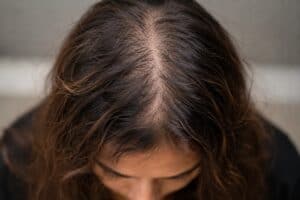
Supplementing biotin for hair growth is not warranted if not necessary, and the evidence for supplementing without a deficiency is weak.
Signs of actual deficiency: Hair thinning, brittle nails, skin rashes, fatigue.
Best Indian sources: Eggs (especially the yolk), peanuts, almonds, sweet potato, oats. A varied Indian diet typically provides adequate biotin.
The honest truth: Before buying biotin supplements, get tested. Spending money on biotin when you are iron or protein-deficient will not help your hair.
6. Omega-3 Fatty Acids — The Scalp Nourisher

Omega-3s reduce scalp inflammation, improve blood circulation to follicles, and keep the scalp hydrated. Chronic inflammation at the scalp level is an underrecognised driver of follicle miniaturisation and hair loss.
Signs in hair: Dry, itchy scalp, dull hair, increased shedding linked to inflammatory conditions.
Best Indian sources: Flaxseeds (alsi), walnuts, chia seeds, fish (mackerel, sardines, rohu). Add one tablespoon of ground flaxseed to your roti dough or curd daily.
7. Zinc — The Follicle Protector
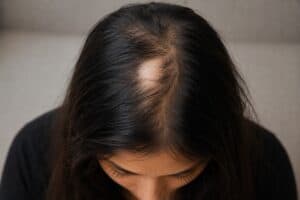 Zinc supports hair tissue growth and repair, regulates oil glands around follicles, and plays a key role in protein synthesis. This deficiency causes a specific pattern of patchy hair loss — and correcting your levels brings rapid improvement.
Signs in hair: Patchy hair loss, slow regrowth, white spots on nails (a classic zinc sign), dandruff.
Best Indian sources: Pumpkin seeds, sesame seeds, cashews, rajma, chickpeas, whole grains.
8. Copper — The Melanin Maker
Copper is a cofactor for tyrosinase, the enzyme responsible for producing melanin — the pigment that gives hair its colour. Without copper, melanin production slows, and premature greying accelerates.
Signs in hair: Premature greying, brittle strands, slow growth.
Best Indian sources: Til (sesame seeds), rajma, cashews, dark chocolate, sunflower seeds, mushrooms.
The Most Important Thing Your Dermatologist May Not Have Told You
Hair loss is multifactorial — no single nutrient fixes everything. Before buying supplements, get a comprehensive blood panel that includes serum ferritin, B12, Vitamin D, zinc, and a thyroid profile. Supplementing the wrong thing wastes money. Correcting the right deficiency can transform your hair in 3–6 months.
And remember: most of these nutrients are available in abundance in traditional Indian foods. Your kitchen already has the solutions — the question is whether your daily plate is delivering them in adequate amounts.
Quick Summary
| Nutrient | Hair Effect | Best Indian Food Source |
|---|---|---|
| Iron | Diffuse shedding, thinning at the crown | Halim seeds, palak, ragi, rajma |
| Protein | Heavy shedding, growth stops, brittle strands | Eggs, paneer, dahi, moong dal |
| Vitamin B12 | Premature greying, shedding | Dahi, paneer, eggs, fish |
| Vitamin B6 | Itchy scalp, dull hair, slow growth | Chana, banana, sunflower seeds |
| Biotin | Thinning, brittle nails (if deficient) | Eggs, peanuts, almonds, oats |
| Omega-3 | Dry scalp, inflammation, dullness | Flaxseeds, walnuts, fish |
| Zinc | Patchy loss, dandruff, slow repair | Pumpkin seeds, rajma, cashews |
| Copper | Premature greying, brittle hair | Til, rajma, cashews, dark chocolate |
EndNote
Hair health is a reflection of your overall nutritional status — and for most Indian women, the solution lies in eating more intentionally, not in buying more supplements. If your hair is giving you signals, listen to them. Get the right tests done, speak to a qualified dietitian, and trust your food before you trust a pharmacy shelf.
For personalised guidance, reach out at care@dietburrp.com. I would love to help you build a diet that works for your hair, your hormones, and your whole body.







 DNA Test for Weight Loss in India | Cost, Best Brands, and How It Works
Comment Policy:
We are glad you have chosen to leave a comment. We wish to inform you that the comments are moderated to avoid obscenity. Sometimes , we might take around 3 to 4 days to get back to you with the reply